Why every NEET aspirant needs a plan B (and why it’s not failure)
Why every NEET aspirant needs a plan B (and why it’s not failure)
Introduction: The MBBS-or-Nothing narrative
In 2025, over 20.9 lakh students appeared for NEET competing for just 1.18 lakh MBBS seats. That means only 1 in 10 qualified candidates will secure an MBBS seat. Yet most of them had been told the same thing their whole lives:
"Either you become a doctor through MBBS, or you failed."
And honestly, this is one of the most damaging narratives students in India have been taught. Healthcare today is not just hospitals and surgeons. The world needs physiotherapists, nurses, rehabilitation experts, speech therapists, veterinarians, diagnostic professionals, mental health specialists, and many more healthcare workers who keep systems running every single day.
The problem is not that students dream of MBBS. The problem is being told that nothing else matters.
A Plan B does not mean:
- you are less capable
- you are giving up
- you are "settling"
It means you are thinking realistically about your future while still chasing your dream.
Why every NEET aspirant needs a plan B
NEET is one of the most competitive exams in India. Every year, lakhs of students appear for the exam, while the number of government MBBS seats remains limited. With rising competition and high expectations, the pressure on students continues to grow.
This is why having a Plan B is important. It does not mean giving up on the dream of becoming a doctor. Instead, it helps students approach their preparation with more clarity and less fear. A backup plan can reduce emotional pressure, help students make informed decisions, and prevent their confidence from depending entirely on the result of one exam.
Having another pathway in mind also brings career clarity early and helps students stay mentally stronger if things do not go as expected. In many cases, students actually prepare better when they know that one exam does not define their entire future.
The reality of NEET competition in India
The reality of NEET competition in India is far harsher than many students expect. Every year, lakhs of aspirants compete for a limited number of MBBS seats, creating an enormous gap between demand and availability. The hard truth is that not every hardworking student secures an MBBS seat and that does not mean they are unintelligent, incapable, or undeserving of a successful healthcare career.
Many highly capable students miss MBBS admissions by a very small margin despite years of preparation, discipline, and sacrifice. In such an intensely competitive system, outcomes are often shaped not just by effort, but also by limited seats, cut-off trends, reservation dynamics, exam-day performance, and access to guidance. That is why students must understand that their future cannot be defined by a single exam outcome alone.
Why medicine is bigger than just MBBS
The global healthcare system is under pressure from every direction, aging populations, rising chronic diseases, growing mental health challenges, and an exploding demand for rehabilitation, diagnostics, and preventive care. None of these problems are solved by simply increasing MBBS seats.
What the world actually needs is a diverse healthcare workforce. Modern healthcare extends far beyond the hospital ward. It lives in physiotherapy clinics, diagnostic labs, mental health centres, elderly care facilities, sports medicine units, and community wellness programmes. Veterinary care is expanding. Rehabilitation demand is rising. Preventive medicine is becoming a priority for healthcare systems worldwide.
These are not secondary fields. They are the backbone of a functioning health system and many of them are among the fastest-growing sectors in healthcare today.
Preparing for MBBS without losing yourself
If MBBS is your dream, pursue it with everything you have but don’t let a single exam define your confidence or your future. NEET preparation can feel overwhelming, especially during phases where doubts, pressure, and inconsistency begin to build up. That’s why the right guidance matters as much as hard work.
Lytmus AI is built to ensure students never prepare alone. Designed around the teaching approach of India’s top educators, it supports students through every stage of preparation with personalized mentorship, instant doubt support, structured study guidance, and daily learning continuity. Because cracking an exam is important but protecting your confidence, mental health, and long-term growth matters.
Let’s talk about the actual options
BDS (Bachelor of Dental Surgery) – 5 Years
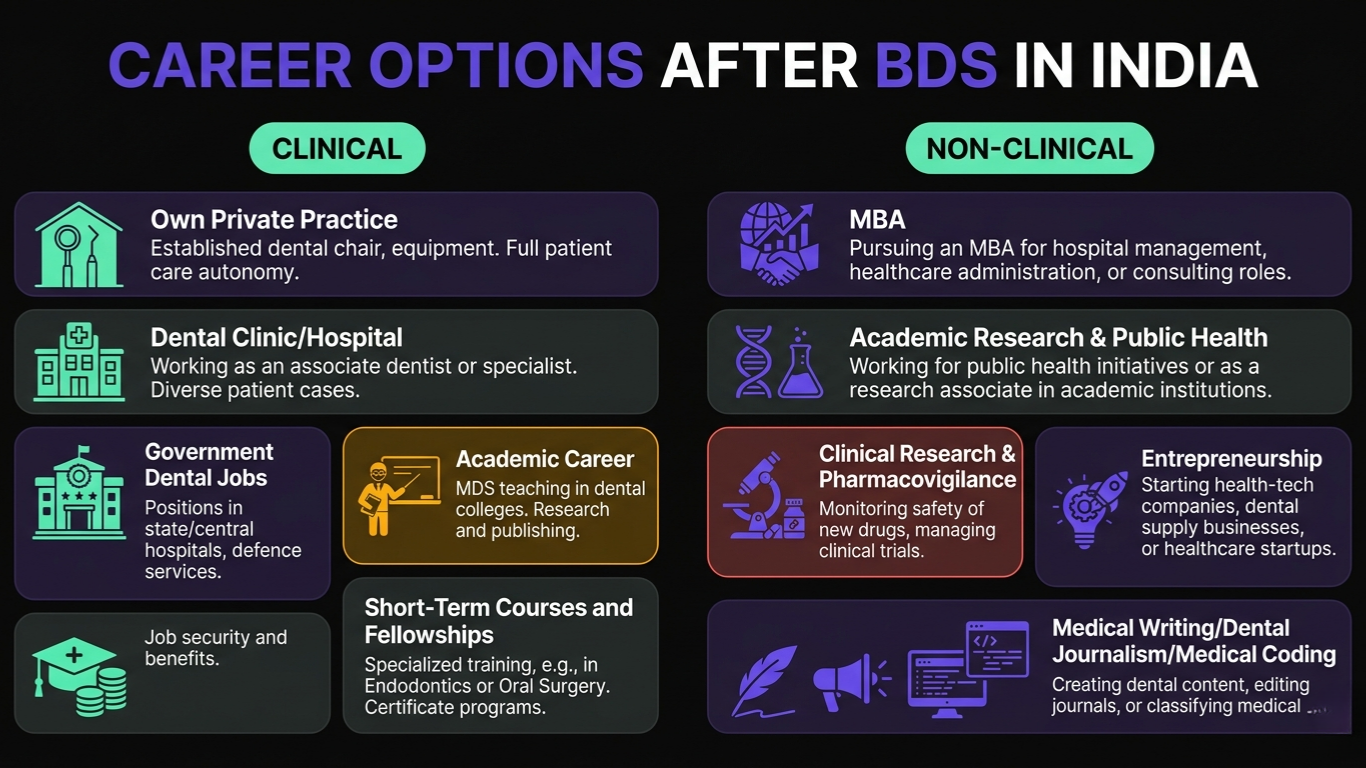
Dentistry is often heavily underestimated in India, with many students viewing it as a limited career option compared to MBBS. However, globally, the field is expanding rapidly due to growing demand for cosmetic dentistry, orthodontics, smile correction, dental implants, and aesthetic procedures.
What many students don’t realise is that dentistry offers strong opportunities for independence and specialization. Many dentists go on to build successful private practices, specialize abroad, enter the cosmetic healthcare industry, or create thriving clinics and businesses of their own. In many cases, the problem is not the degree itself, but the lack of awareness about the wide range of opportunities the field actually offers.
AYUSH courses (5.5 Years)
AYUSH courses are becoming increasingly relevant as healthcare moves beyond just treatment and toward prevention, wellness, and lifestyle-based care. The AYUSH ecosystem includes:
- BAMS (Ayurveda)
- BHMS (Homeopathy)
- BNYS (Naturopathy & Yoga Sciences)
- BUMS, and BSMS
The sector is growing rapidly due to increasing awareness around preventive healthcare, wellness tourism, lifestyle medicine, yoga acceptance globally, and chronic illness management. In particular, BNYS and Ayurveda are now intersecting with corporate wellness programs, holistic healthcare models, functional health ecosystems, rehabilitation, and lifestyle care creating new-age career opportunities beyond traditional clinical practice.
Healthcare in the future may no longer be centred only around hospitals and treatment after illness. Instead, it is increasingly moving towards a model focused on prevention, wellness, recovery, and lifestyle optimisation helping people stay healthier for longer, recover better, and improve overall quality of life before serious medical intervention becomes necessary.
BVSc & AH (Veterinary Science)
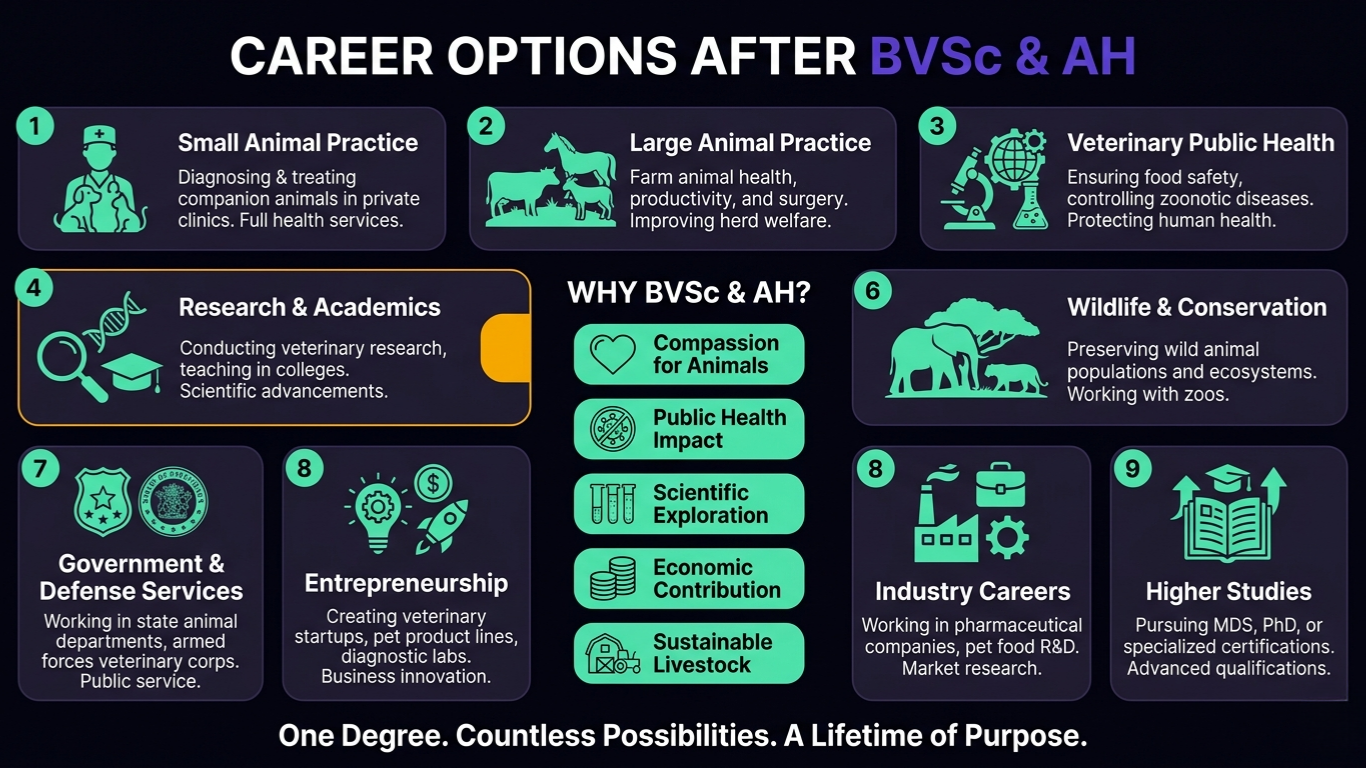
Many students underestimate veterinary medicine because they still associate it only with farm animals. But the reality is very different today. India’s pet care ecosystem is growing rapidly, creating opportunities far beyond traditional veterinary practice.
The field now includes:
- advanced surgeries
- pet physiotherapy
- diagnostics
- nutrition
- animal rehabilitation
- emergency care
- pet startups
For students who genuinely love animals, veterinary medicine can become an incredibly meaningful and fulfilling career one that combines science, compassion, and long-term impact.
B.Sc nursing – 4 Years
Globally, nurses are among the most in-demand healthcare professionals, with countries like the UK, Germany, Australia, Canada, and several Gulf nations actively hiring skilled nursing talent. The profession offers far more than many students in India initially assume.
Nursing today provides strong job stability, international migration opportunities, specialization pathways, ICU and critical care roles, and even long-term leadership tracks within healthcare systems.
| Higher Studies | Clinical Career | Non-Clinical Career |
|---|---|---|
| Master’s in Nursing (MSc Nursing) | Registered Nurse | Clinical Research |
| Doctor of Nursing Practice (DNP) | Community Care Nurse | Pharmacovigilance |
| PhD in Nursing | Critical Care Nurse | Healthcare Administrator |
| Master of Public Health | Personal Nurse / Home Healthcare Nurse | Clinical Data Management |
| Pediatric Nurse | Medical Coding | |
| Medical Writing |
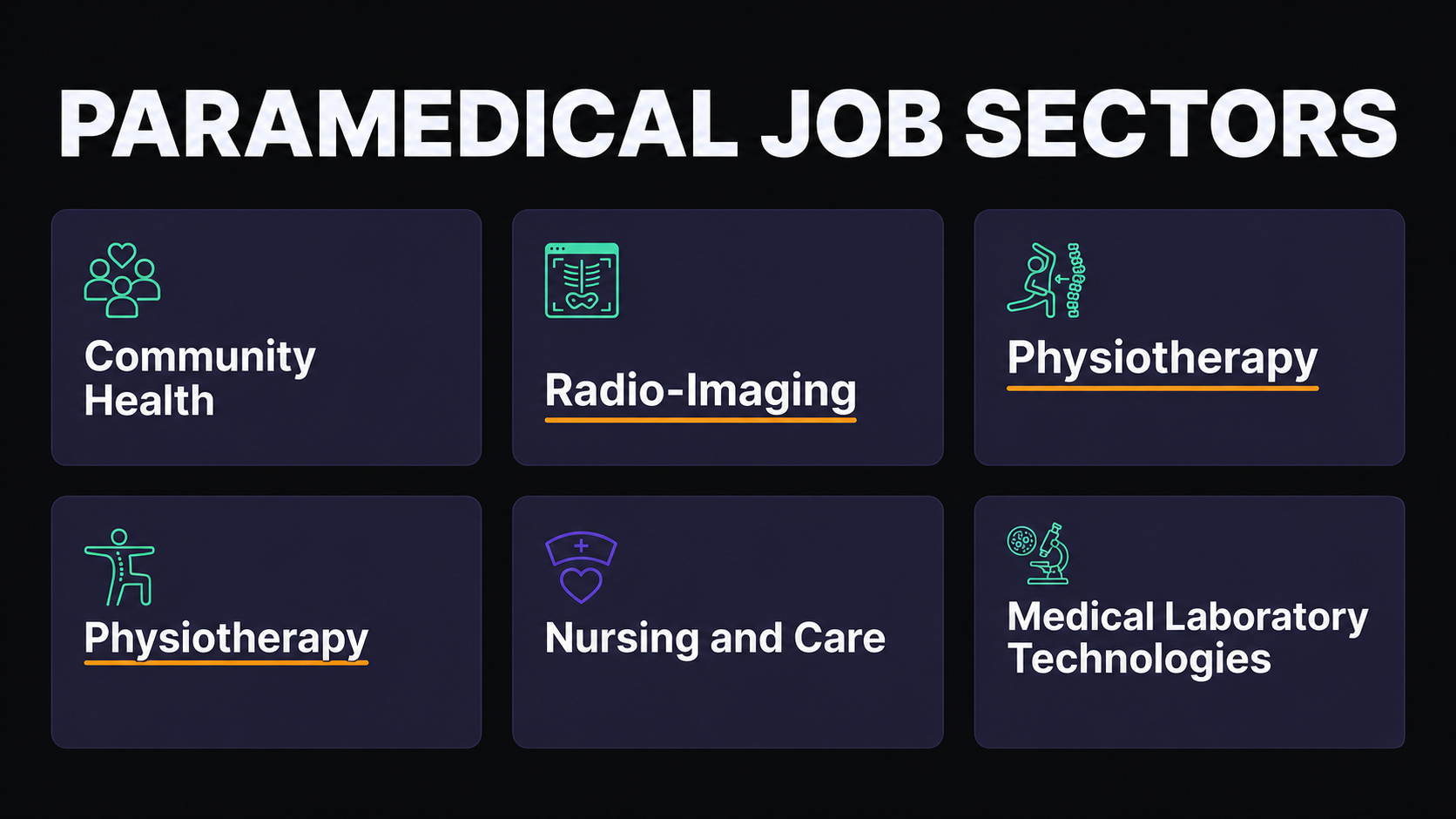
Allied Health & Paramedical Fields
Allied health and paramedical fields are massively underrated, despite being one of the most essential pillars of modern healthcare. In reality, healthcare systems cannot function efficiently without these professionals. From medical laboratory technology and radiology to physiotherapy, operation theatre technology, emergency care, and respiratory therapy, allied healthcare workers play a critical role in diagnosis, treatment, recovery, and patient support every single day.
BPT (Physiotherapy)
Physiotherapy is becoming one of the fastest-growing healthcare fields as modern lifestyles continue to create long-term physical health challenges. From sports injuries to posture-related pain and mobility issues, physiotherapists now play a critical role in recovery, rehabilitation, and improving quality of life.
- Growing demand due to sedentary lifestyles and posture-related problems
- Major opportunities in sports rehabilitation and pain management
- Increasing need for neurological rehab and elderly mobility care
- Career opportunities across hospitals, rehab centres, sports clinics, and wellness facilities
BOT (Occupational Therapy)
Occupational therapy is one of the most meaningful yet under-discussed healthcare careers in India. Occupational therapists help patients regain independence and improve daily functioning after injuries, developmental conditions, neurological disorders, or physical disabilities. Their work focuses on helping people live more independently, confidently, and comfortably in their everyday lives.
- Supports recovery after injuries and neurological conditions
- Helps children and adults with developmental or physical challenges
- Focuses on improving independence and quality of life
- Growing demand across rehabilitation centres, hospitals, and special care facilities
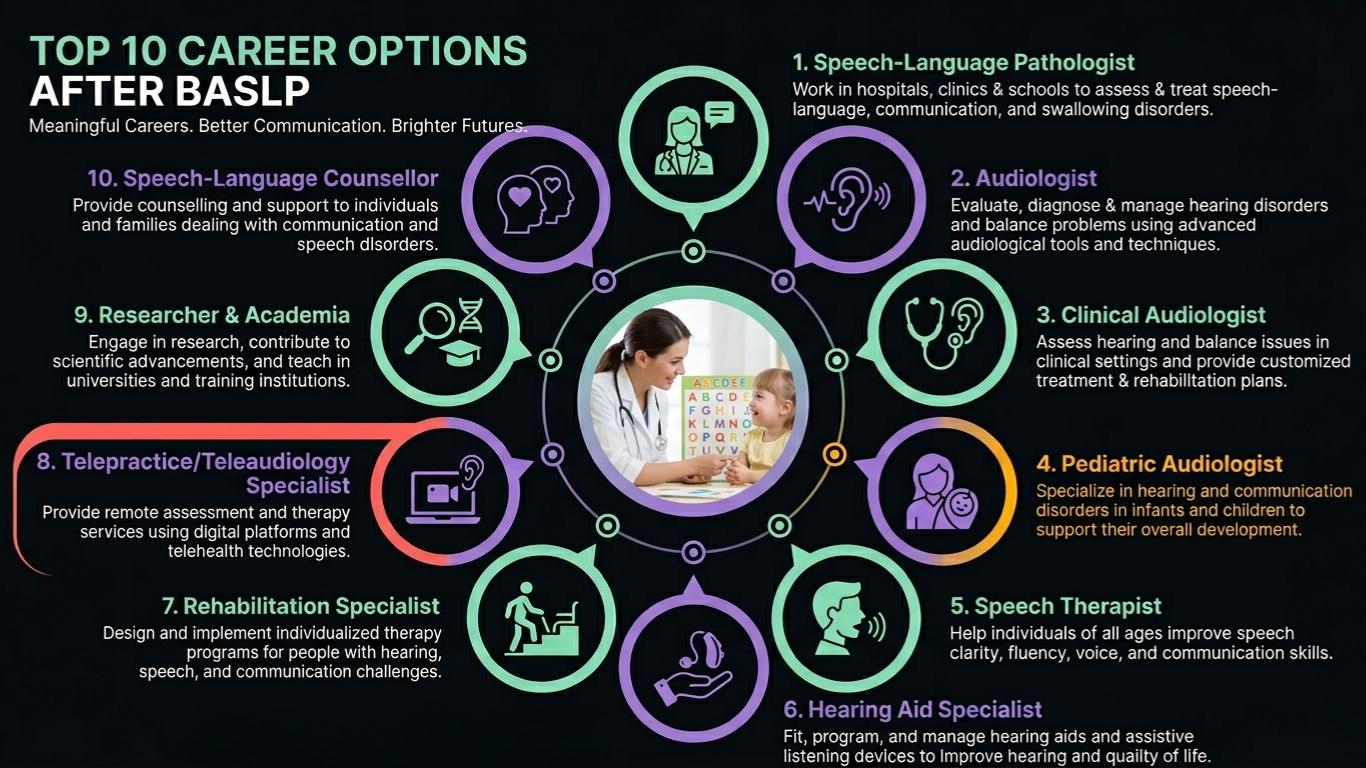
BASLP (Audiology and Speech-Language Pathology)
Speech and language therapy is emerging as one of the fastest-growing allied healthcare careers as awareness around communication and developmental disorders continues to increase. The demand for speech and language professionals is rising rapidly due to greater focus on autism support, child development therapy, speech delay treatment, and early intervention programs.
Beyond child therapy, speech and language professionals also play a critical role in stroke rehabilitation, hearing impairment care, neurological recovery, and cognitive communication support.
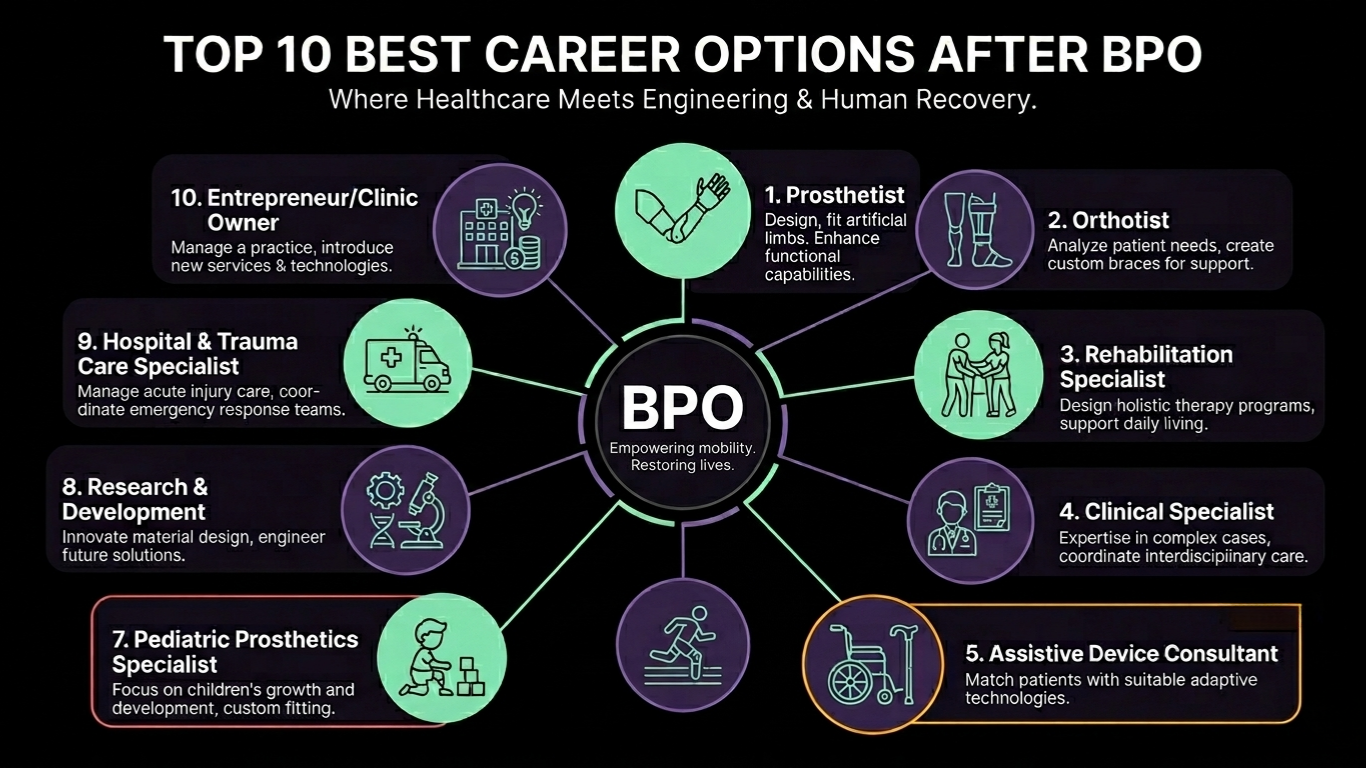
BPO (Prosthetics & Orthotics)
This is where healthcare meets engineering, innovation, and rehabilitation. The field focuses on improving mobility, recovery, and quality of life through advanced assistive and rehabilitation technologies, making it one of the most futuristic healthcare careers today.
- Works on artificial limbs and mobility support devices
- Involves rehabilitation technology and recovery support systems
- Growing rapidly with advancements in healthcare innovation and assistive care
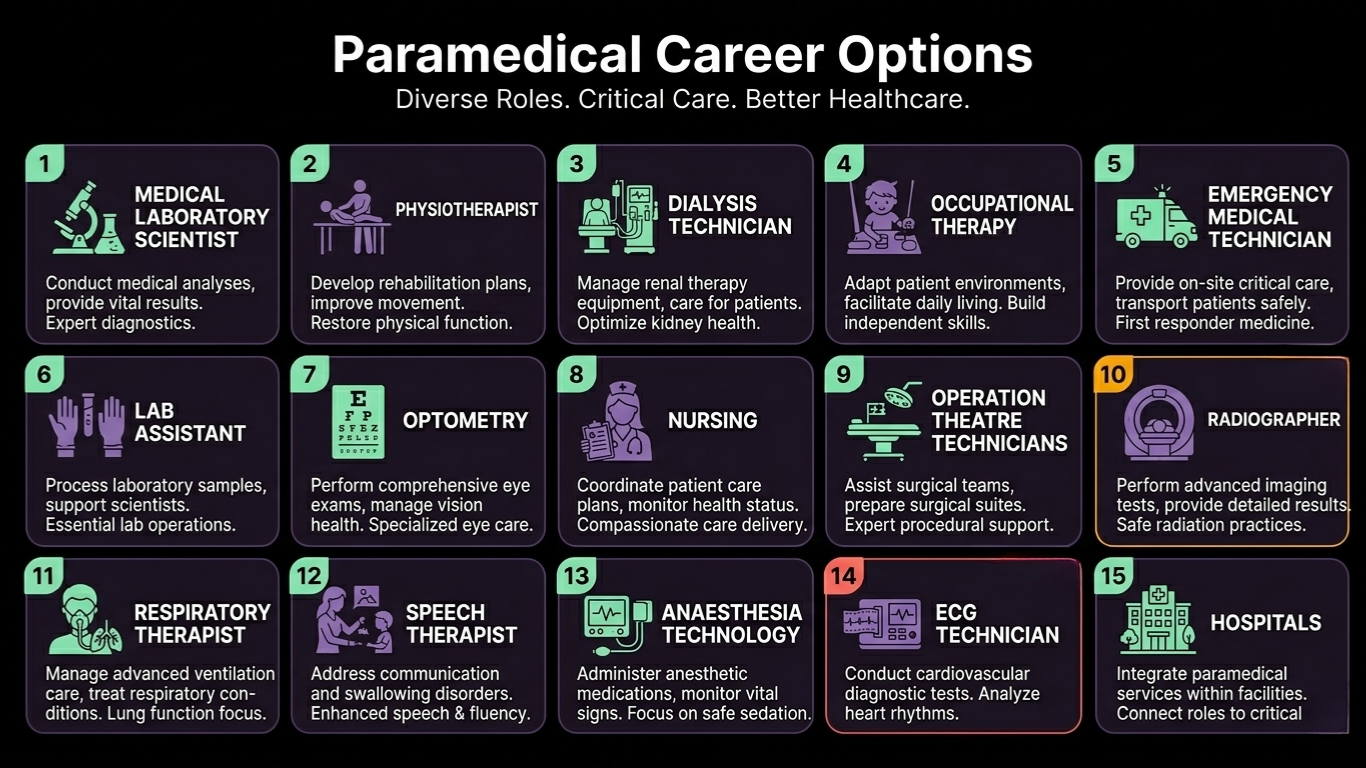
B.Sc Paramedical Courses
Healthcare technology and diagnostic careers are becoming increasingly important as hospitals and healthcare systems rely more on advanced medical technology for accurate diagnosis and treatment.
- Popular options include Medical Lab Technology, Radiology, Imaging Sciences, and Operation Theatre Technology
- Growing importance due to expanding diagnostics and preventive screening
- AI-assisted imaging and advanced healthcare technology are creating new opportunities
- Modern hospitals increasingly depend on skilled technical and diagnostic professionals
Study abroad options after NEET
Many students preparing for NEET don’t even realise that studying healthcare courses abroad is a possible pathway. Countries like Russia, Georgia, Philippines, Kazakhstan, Uzbekistan, Germany, Australia, and the United Kingdom offer different healthcare education opportunities for international students. However, choosing this route requires careful research and long-term planning, not just admission.
The Bigger Picture
“The students who suffer most are not those who "missed" MBBS. They are those who were never shown that the map was bigger than the one road they were told to take.”
— Gaurav Gupta (Physics)
A dentist who builds a practice she is proud of. A physiotherapist working in sports rehabilitation. A nurse whose skills are in demand on three continents. A veterinarian who chose the work because she actually loves it. None of these people are living consolation prizes. They are doing the thing that healthcare systems everywhere are desperate for showing up, with skill, in the specific place they are needed.
The damage done by the MBBS-or-nothing narrative is not just emotional. It is structural. It steers students away from fields that are genuinely undersupplied, and toward a single bottleneck, producing despair on one side and a healthcare workforce gap on the other.
Conclusion: A plan B is not failure
Healthcare is a massive ecosystem, and every role is vital. Choosing a Plan B is about being smart, realistic, and resilient. Your value as a healthcare professional is not determined by the letters after your name, but by the impact you have on the lives of your patients.


